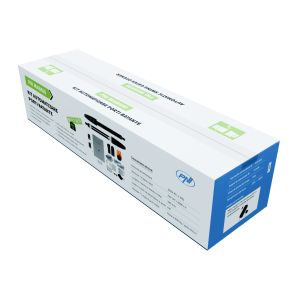


PNI LMP150 LED lamp for gate opening signaling, 12-265V, flashing, for self-supporting gates, IP54
|
|
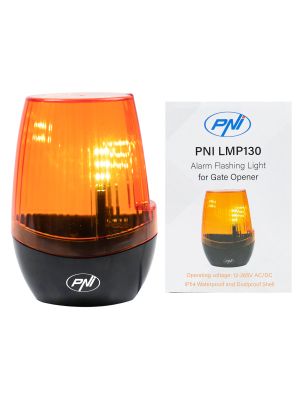
LED gate signal lampPNI LMP150 is an LED signal lamp intended for use in automatic gate opening systems, designed to provide a clear visual warning when the gate is in motion. This lamp is suitable for both swing and cantilever gates, as well as other types of automation, adding an extra level of safety by alerting people and vehicles in the vicinity. |
Features and functionalityThe LED lamp operates within a voltage range of 12 V to 265 V AC/DC, making it compatible with most gate automation systems. With a maximum power of only 3 W and a standard flashing frequency of 1 Hz, it provides an effective visual signal without high energy consumption. The housing has an IP54 protection rating, which means it is dust and water resistant, allowing outdoor use without major risks in normal weather conditions. |
|
|
|
Role in automated gate systemsIn an automated gate system, the visual signaling provided by this lamp plays an important role in operational safety. When the gate is activated and begins to move, the flashing or continuous light (depending on the setting) warns pedestrians and drivers of the movement in progress, reducing the risk of accidents. Although it does not replace other safety devices such as photocells or proximity sensors, the lamp effectively complements the protection system. |
The role of the antenna and how to connect itThe antenna used with the PNI LMP150 signal lamp serves to improve the reception and transmission of radio (RF) signals within a gate automation system. This antenna is intended for radio control systems, such as integrated or external remote control receivers. By connecting an antenna, the operating distance can be increased and more stable communication between the remote control and the control unit can be ensured, especially in areas where there are obstacles, interference, or where the equipment is mounted in metal enclosures. The antenna connects to the dedicated terminal on the lamp board (usually marked as antenna terminal, type T2) and must be positioned vertically or in an open space to achieve optimal radio performance. Thus, the lamp becomes a useful integration point for extending the RF signal throughout the automation system. |
|
|
|
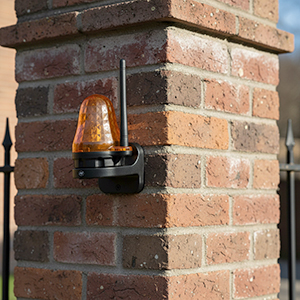
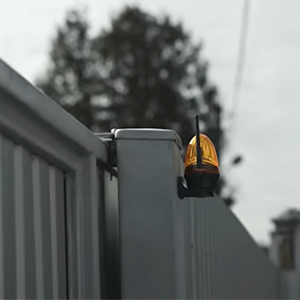
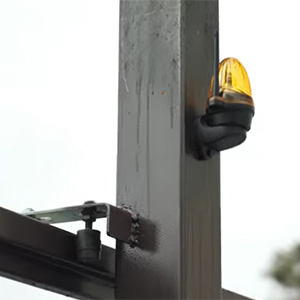
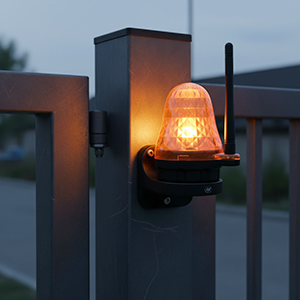
Installation and configuration in the automated systemThe PNI LMP150 must be installed by a qualified specialist, as it also involves connection to the gate automation electrical system. The lamp is mounted on a wall or pole in a position visible to gate users, and the power cables and, if necessary, the antenna (if included for extending the RF operating range) are passed through the holes provided in the bracket. The lamp must be mounted perpendicular to the ground to prevent water from entering the housing. After fixing, the lamp is connected to the terminals of the automation system according to the wiring diagram, thus ensuring correct and safe operation. |


FAST SHIPPING
You'll have your ordered products in just a few days.
MONEY BACK GUARANTEE
If you decide to return your products, you will get all your money back.
ONLINE SUPPORT 24/7
Contact us and we will answer to all your questions about orders, returns or warranty.